
Machine embroidery is fun, creative, and useful. It helps you turn plain fabric into beautiful art. You can make logos, names, flowers, borders, and many other designs. But to get clean and neat results, you need to learn stitch patterns.Many beginners feel confused at first. There are many stitch types, and each one has a job. Some fill big spaces. Some make outlines. Some add texture. If you want better results, start with this Guide to Machine Embroidery Stitches and then practice the basics one by one.
The good news is that you do not need to learn everything in one day. Small steps work best. When you understand common stitch patterns, your designs look smoother, sharper, and more professional. In this article, you will learn easy ways to master the most used stitch styles in embroidery machines.
Stitch patterns are the building blocks of machine embroidery. Every design uses them in different ways. The right stitch can improve shape, texture, and strength.
If the wrong stitch is used, the design may look messy. Fabric may pull. Threads may bunch up. Edges may not look clean.
Learning stitch patterns helps you:
That is why stitch knowledge is important for every beginner.
Start with the most common stitch types. These are used in many designs.
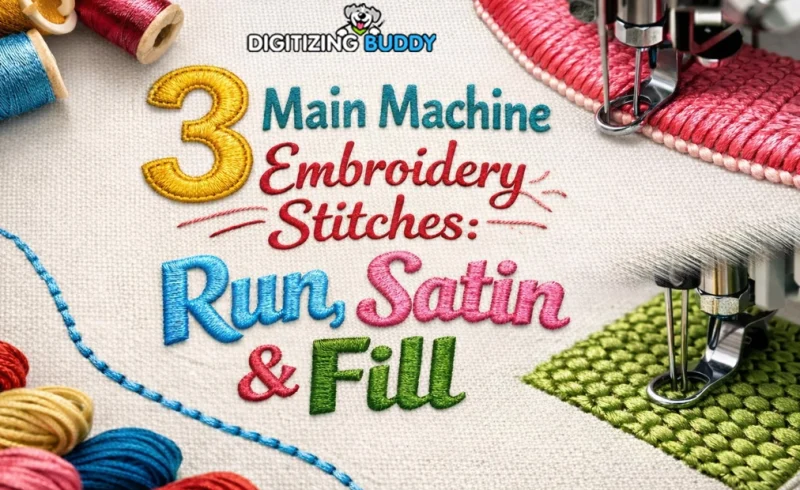
Satin stitch is smooth and shiny. It is used for letters, borders, and narrow shapes.
Best for:
Tips:
Fill stitch covers large spaces with thread. It adds color and texture.
Best for:
Tips:
Running stitch is a simple line stitch. It is often used for detail and travel lines.
Best for:
Tips:
Do not begin with large hard designs. Start with simple shapes like:
These shapes help you learn how stitches move. You also learn how fabric reacts during sewing.
Practice one stitch type at a time. Then mix two stitch types later.
Fabric plays a big role in embroidery. A stitch that looks great on cotton may fail on fleece or knit.
Easy for beginners. Stable and smooth.
Stretchy fabric needs stabilizer. Use lighter density when needed.
Towels and fleece need topping and stronger support.
Always test before final work. This saves time and fabric.
Stabilizer supports fabric during stitching. It helps stop puckering and shifting.
Good for stretch fabric and items washed often.
Good for firm woven fabric.
Used for lace and special projects.
Without stabilizer, even the best stitch pattern can fail.
Thread tension affects stitch look. If too tight, fabric pulls. If too loose, loops may show.
Change one thing at a time. Test again after each change.
This simple habit teaches you faster.
Density means how close the stitches are.
Too dense:
Too light:
Use balanced density. Many machines or software tools allow changes. Test before full runs.
The needle matters more than many beginners think.
Good for light fabric and detail work.
Good for general projects.
Good for knit fabric.
Change dull needles often. A fresh needle gives cleaner stitches.
Bad hooping can ruin good stitch settings. Fabric must be smooth and firm in the hoop.
A loose hoop can cause shifting and poor outlines.
Stitch direction changes how light hits thread. It also changes texture.
For example:
Try the same shape with new angles. You will see a big change.
This is a smart way to grow your skill fast.
Every beginner faces mistakes. That is normal. Learn from each issue.
Cause:
Fix:
Cause:
Fix:
Cause:
Fix:
This is one of the best expert tips. Save samples of your tests.
Write notes like:
Over time, this becomes your own guide. It builds real experience.
Even perfect machine settings cannot fix a poor design file. A well-made file uses the right stitch type in the right place.
Look for designs with:
Quality files help beginners learn faster.
Skill grows with repeat work. Make a small plan.
Practice satin stitch on letters.
Practice fill stitch on shapes.
Practice running stitch on lines.
Mix all three in one small logo.
Short practice sessions work well. Even 20 minutes helps.
Fast speed is not always best. Slow speed gives better control on tricky designs.
Use slower speed for:
Use normal speed for simple fills.
This can reduce mistakes fast.
Many new users guess settings and hope for good results. That wastes time.
Instead:
This method builds trust in your process. It also saves money.
Experts often follow simple habits every day.
Remove lint often.
Follow your machine guide.
Do not wait too long.
Cheap thread can break more.
Keep tools ready.
These habits improve stitch quality over time.
| Stitch Type | Best Use |
| Satin Stitch | Text, borders, narrow shapes |
| Fill Stitch | Large areas, logos |
| Running Stitch | Detail lines, travel lines |
Keep this chart near your machine until it becomes natural.
Do not compare your first work to expert work. Every pro started as a beginner.
Your first goals should be:
Small wins lead to great results.
Learning stitch patterns does not need to be hard. Start with satin, fill, and running stitch. Practice on simple shapes. Use the right stabilizer, needle, and fabric support. Test often and keep notes.
The more you sew, the more you understand how stitches behave. That is how real skill grows. Stay patient and enjoy the process.
Soon, common stitch patterns will feel easy, and your embroidery work will look clean, sharp, and professional every time.